
Posting Fake Reviews, Keyword Stuffing & Other Red Flags on the GMB
Warning: Avoid These Common GBP Violations
Your Google Business Profile is a powerful tool for local visibility, but certain practices can lead to penalties or suspension. Learn what to avoid and how to stay compliant.
Your Google Business Profile (GBP) becomes a digital front door that defines a customer and their perception of your company in the digital age. It is a most effective tool that local companies can use in order to generate traffic, establish credibility, and Local SEO as well. There are, however, rules on how to be visible like this.
Google has kept an eye on GBP activities, and some behaviors, though not done in a deliberate manner, may cause punishment. Fake reviews, keyword stuffing, and other business profile red flags do not only hurt your reputation, but may also lead to a Google Business Profile suspension.
This blog will reveal the details of the most frequently committed violations, how Google finds them out, and how to stay within the rules and avoid jeopardizing your GBP without breaking the rules that Google gives in the Google Business Profile.
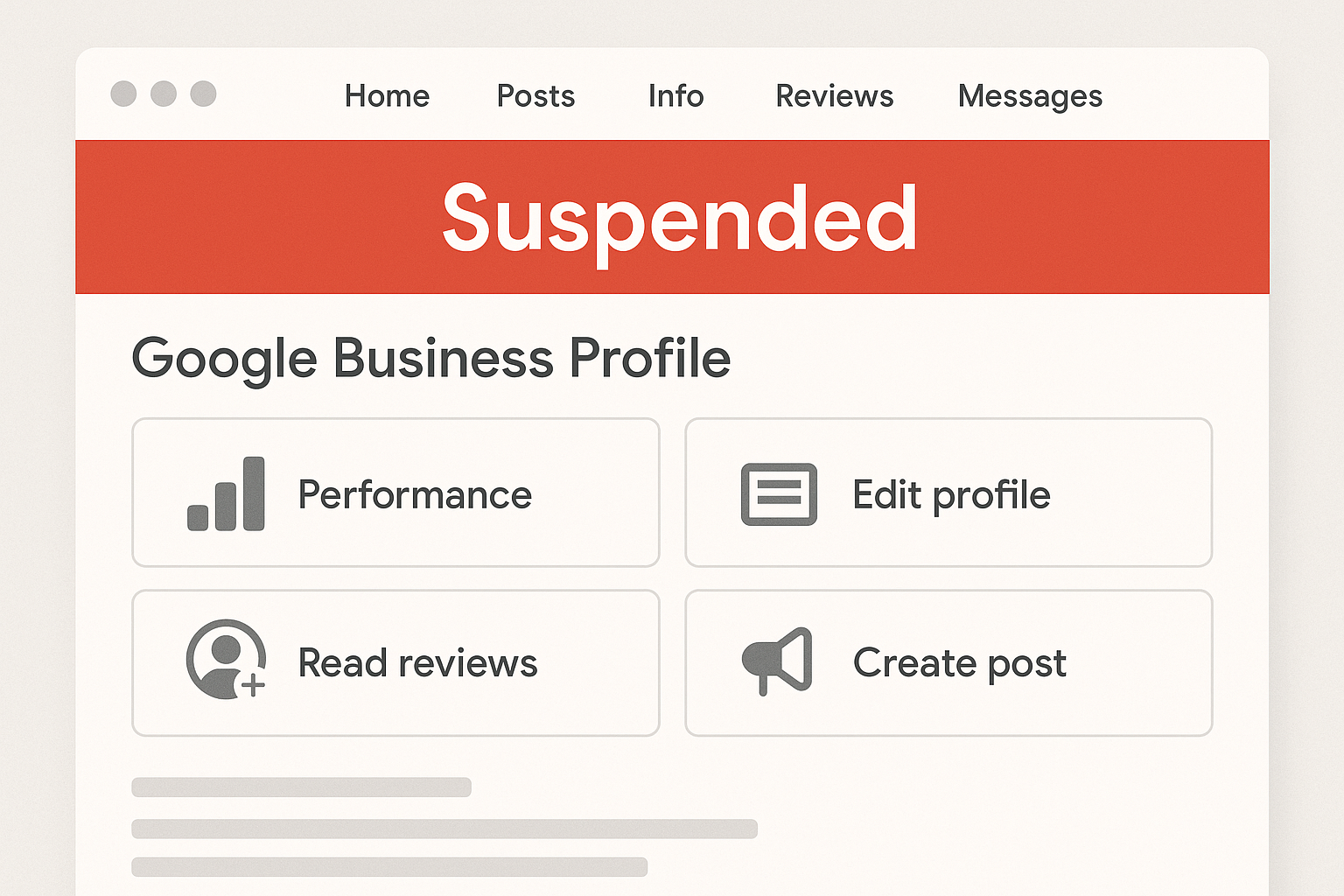
Why Google Flags or Penalizes Business Profiles
The mission of Google is to make information accurate, trustworthy, and useful to the user. Therefore, it has stringent Google Business Profile rules on what to do and not do. Any action that compromises either accuracy or trust may result in your listing getting tagged, temporarily or even permanently disabled.
Google utilises two systems:
Automated Detection
Pattern-matching algorithms that search through content, reviews, and activity.
Manual Reviewing
Performing reports as well as suspicious signal confirmation by use of human analysts.
When it comes to Local SEO, trust is all that. Consistent business information, authentic customer reviews, and correct selection of category inform Google that your business is authentic and trustworthy. Ignorance of these signals, for example fake reviews, keyword stuffing, and some other black operations, makes it higher that your profile would be flagged.
Red Flag #1: Posting Fake Reviews
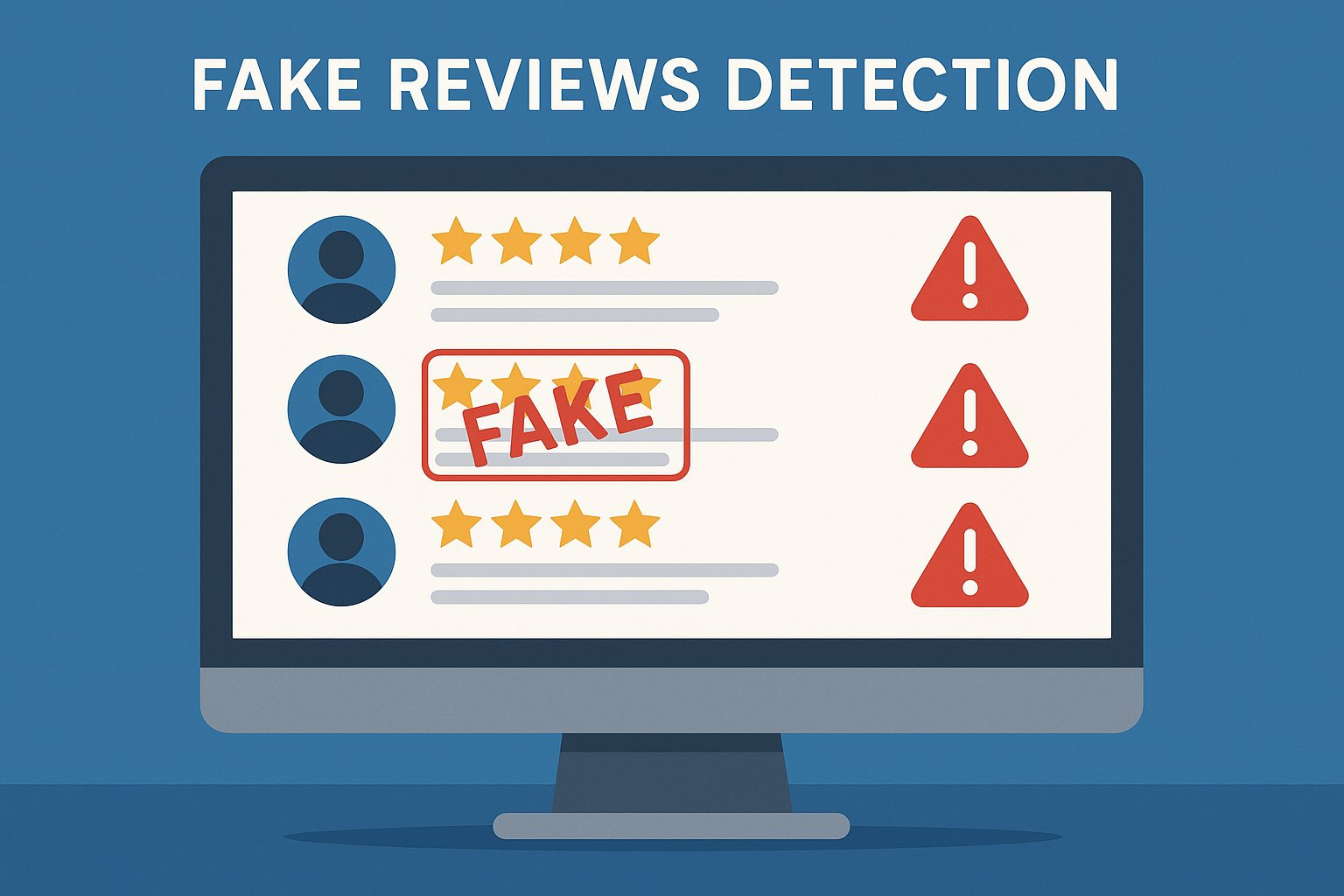
Fake reviews go against the Google fake review policy, and they are one of the quickest ways to lose credibility. This includes:
- Leaving good reviews on your company using fake accounts.
- Paying reviewers to post who have never tried your service.
- Writing unfavourable reviews on the listing of competitors in order to hurt their rating.
The way Google finds fake reviews:
- •IP Tracking: More than one review from the same IP address or location.
- •Content patterns: Word choice, tone, or arrangement that is similar in a number of reviews.
- •Timing Patterns: Short-term large review spikes.
Consequences:
- • Deletion of the fake reviews.
- • Google system loss of review credibility score.
- • The risk of suspension of your Google Business Profile in case of frequent infringements.
Safe Practices:
- • Ask actual customers to provide reviews immediately after their service is received.
- • Employ QR codes, email reminders, in-store reminders.
- • Do not promise any incentive in return for positive feedback - it is contrary to Google terms.
Red Flag #2: Keyword Stuffing
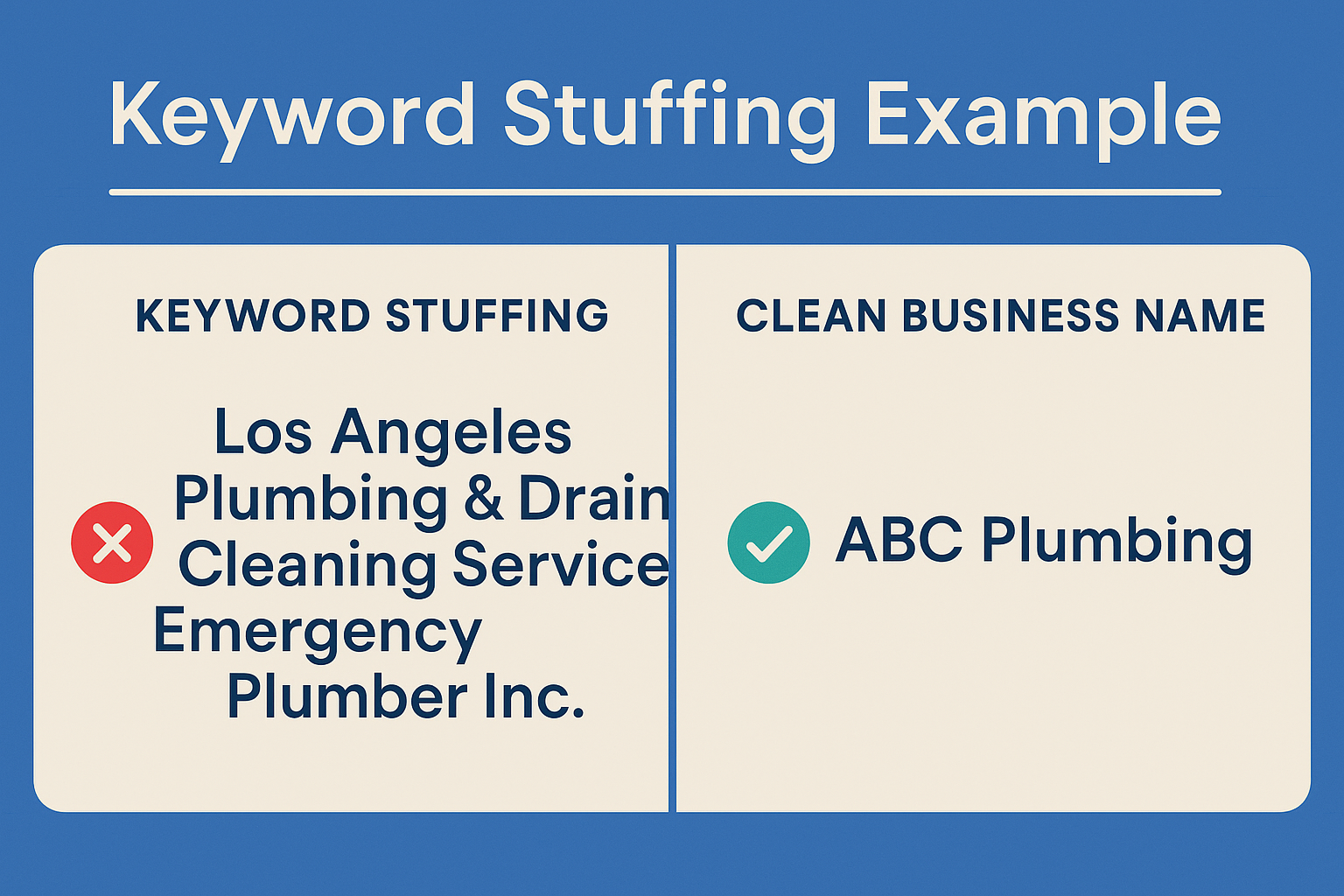
Keyword stuffing usually takes place when you pack too many keywords into your GBP name, description, or posts with the hope that you will achieve high rankings. For example:
❌ Bad Example: New York Pizza Best Pizza New York | NYC Pizza | New York Pizza Deliveries | Affordable Pizza NYC.
Reason it is a problem:
- •Makes reading unpleasant and hinders user confidence.
- •Marks your listing as an abuse of Google's Business Profile policies.
- •May result in being penalized with keyword stuffing issues such as lower rankings or suspension.
Tips for Safe Optimization:
- • The primary keyword should be included in your business name only when it actually is your official legal name.
- • Do not use too many relevant terms in descriptions; instead, pay attention to natural language.
- • Follow the best practices of Local SEO: make use of location keywords and service keywords, but do so wisely.
Other Common Red Flags
Mismatched Business Information
Confusing Google and the customers with inconsistent Name, Address, or Phone (NAP) information across platforms. Such inconsistency sends out the wrong indicators of trust and may reduce your Local SEO.
Duplicate Listings
In some cases, individual businesses end up developing multiple GBPs in the same place without realizing it. This can divide reviews, distort search results, and create suspicion of manipulation or spam.
Misleading Content or Claims
False discounts, inflated service coverage, or stating services you do not actually provide can all be against the rules.
Suspicious Activity Spikes
If your GBP suddenly gets tens of new reviews or a drastic traffic surge without a legitimate cause (e.g., viral media coverage), Google might investigate for spammy activity.
How to Avoid These Red Flags
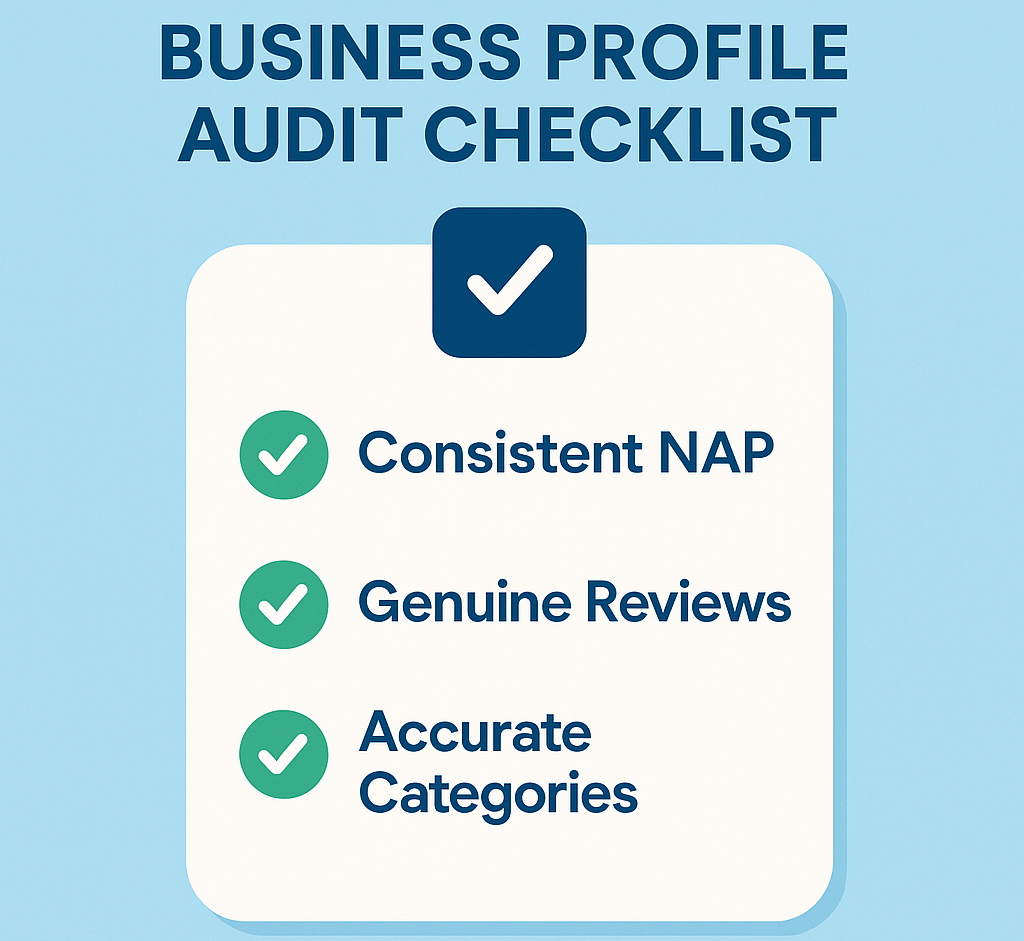
1Run Regular Profile Audits
At least once a quarter, check your GBP information, categories, and content to see whether they are accurate.
2Encourage Authentic Reviews
Set up easy workflows of review requests face-to-face, through email, or by receipt.
3Use Keywords Naturally
Focus on descriptive differentiation instead of repetition of keywords.
4Maintain NAP Consistency
Check that your name, address, and phone number are the same on your website, social media accounts, and listed directories.
5Follow Local SEO Best Practices
Improve engagement through photos, Q&A, and updates regularly without violating the rules.
Including compliance in your strategy protects your business against unnecessary risk and enhances visibility.
Conclusion
The Google Business Profile offered by you is a resource of valuable worth for Local SEO, and it is extremely monitored. Posting a phony review, keyword stuffing, and other business profile warning signs may provide you with a temporary upper hand, but the lasting fallout is drastically more than the short-term benefit.
The suspension of a Google Business Profile may instantly result in a decline of traffic, trust, and sales. The answer is simple: develop your online presence on authenticity, reliability, and following Google Business Profile best practices. Not only does it put you out of danger of penalty, but it also reinforces your credibility with customers as well as search engines.
By avoiding shortcuts and pursuing actual relationships with customers, you will be able to develop a GBP that can achieve sustainable growth, instead of jeopardizing the visibility that you worked hard to gain.